
One year ago today, I was laid off from Vernier Science Education. I've thought about how to write that sentence for a while. Whether to soften it, contextualize it, lead with something else. But it's the fact at the center of this post, and it deserves to just be said.
Today isn't a celebration. It still stings a little, if I'm being honest. But it's an anniversary, and anniversaries are worth marking honestly.

Before
Who I Was When I Got There
Before Vernier, I was freelancing. And before that, I'd spent time at Squarespace.
I used to call it Apple Lite. Squarespace had a habit of hiring ex-Apple employees who'd had enough of the big fruit, and as a designer, I thought it would be a natural fit. Creative adjacent, design-forward culture — it looked good on paper. What it turned out to be was customer service with better aesthetics. I spent my days answering billing questions and domain issues. Mind-numbing work, however polished the surroundings. I left.
Freelancing followed, and for a while it worked. Then it didn't. The feast-and-famine rhythm, the constant self-promotion, the work of running a business on top of doing the actual work. I burned out on that too.
By the time Vernier came along, I'd been through two situations that weren't the right fit. I had started interviewing for positions I could visualize myself growing in. And with interviewing, I would receive devastating rejections. I was ready for something real — a place to put down roots, build something over time, and do design work that mattered. Vernier was my first real design job, and I walked in ready to give it everything.
I did.
The Work
Nine disciplines. One company. Six and a half years.
If you want to see the full body of work, I've organized it into a collection — nine case studies covering everything from brand systems to conference signage. Each one is its own story. Together they're something else entirely.
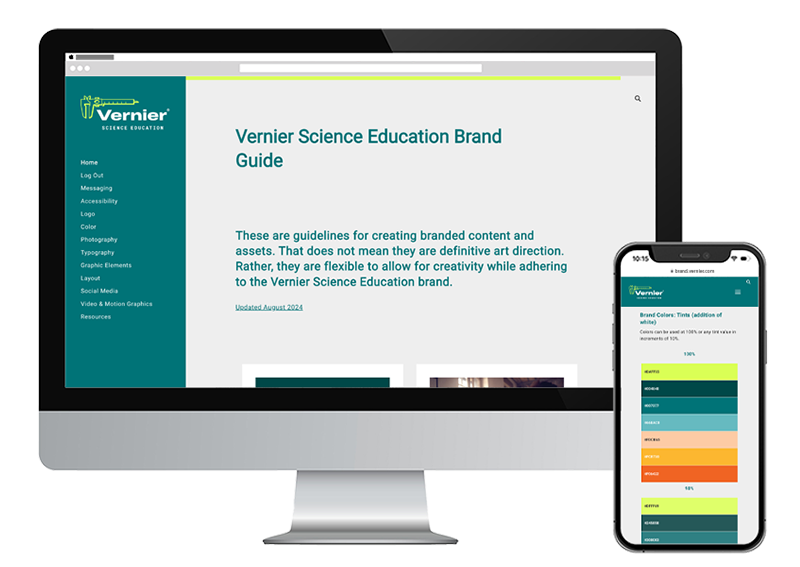
Vernier Brand Guide & Refresh
The first comprehensive brand system Vernier ever had — built from scratch over six years.
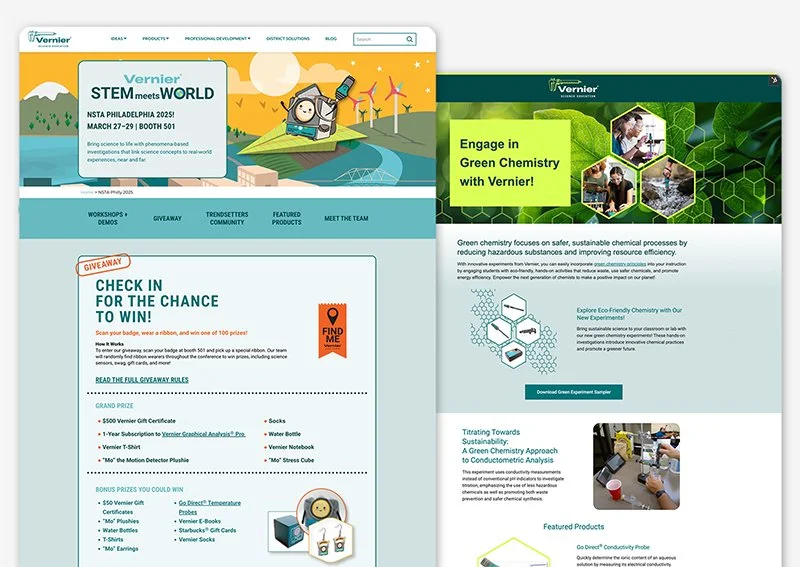
Vernier Campaign Websites
Campaign landing pages supporting product launches, conferences, and seasonal promotions.
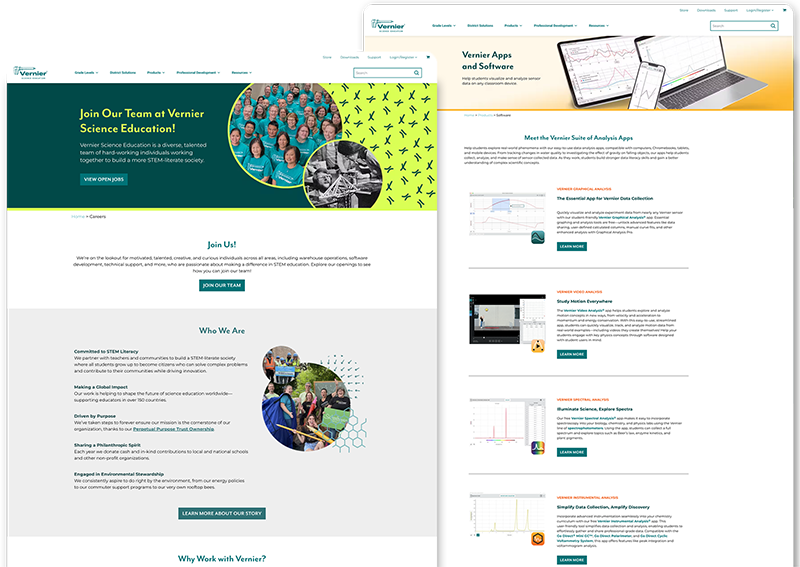
Vernier Internal Website Design
Page design and internal templates across a complex content ecosystem.

Email & Digital Ads
Six years of email campaigns, product announcements, and digital advertising.
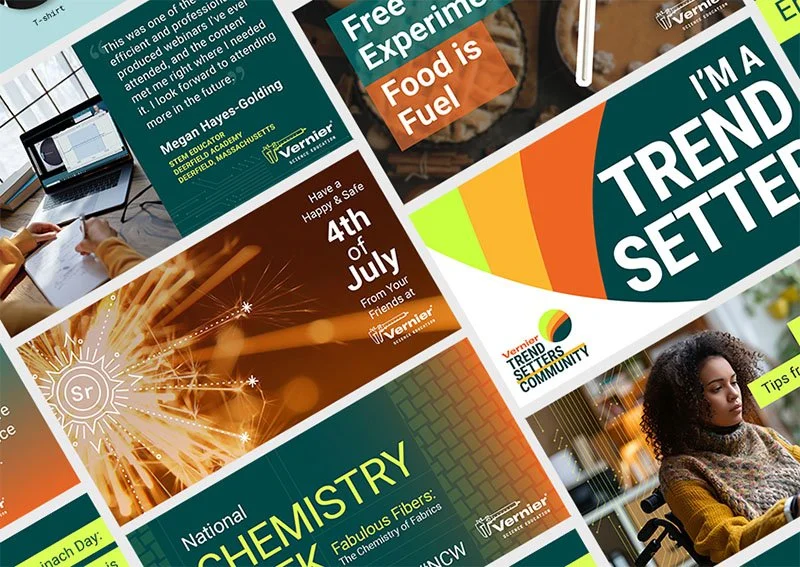
Digital & Social Graphics
Social media graphics, digital assets, and content design across multiple platforms.
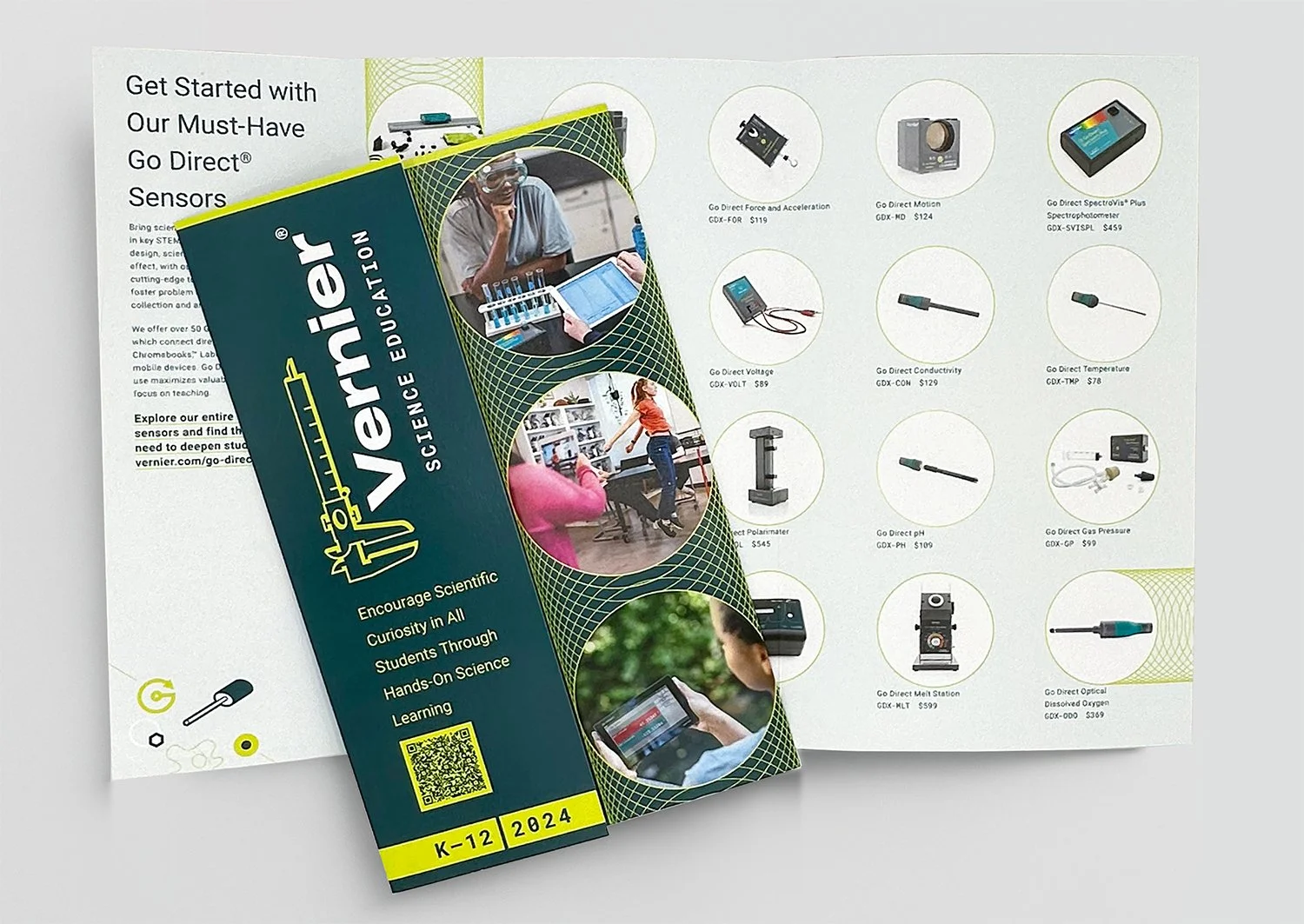
Print Brochures & Packaging
Brochures, flyers, postcards, and product packaging across the full Vernier line.
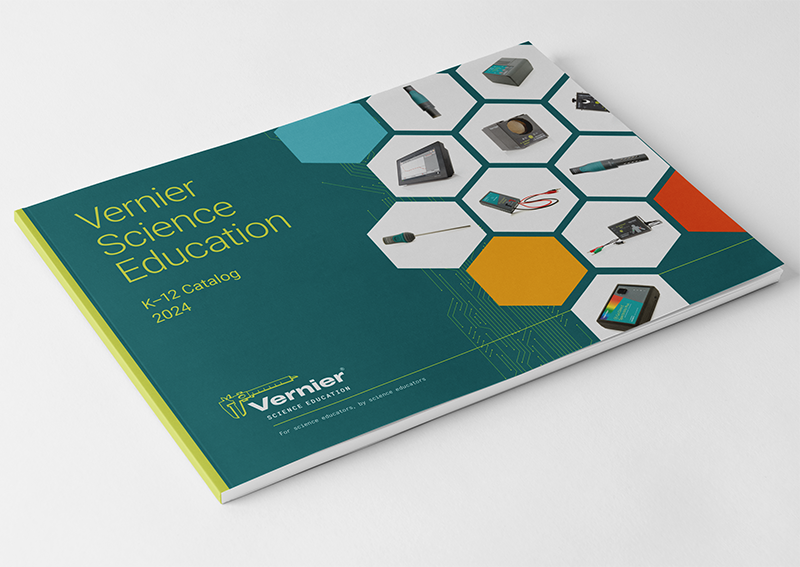
Print Catalogs & Books
Longform print production — product catalogs, lab books, announcements, and academic papers.
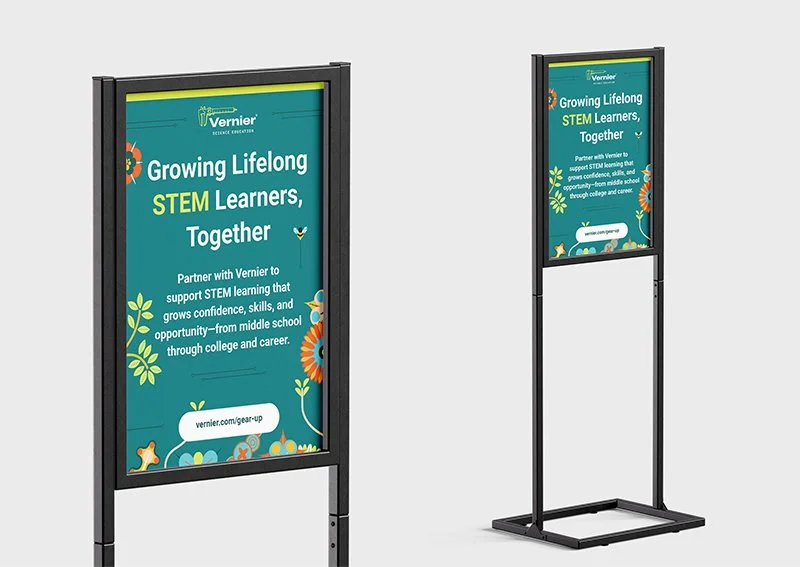
Conference Signage & Swag
Environmental design, large format signage, and branded swag across eight national conferences.
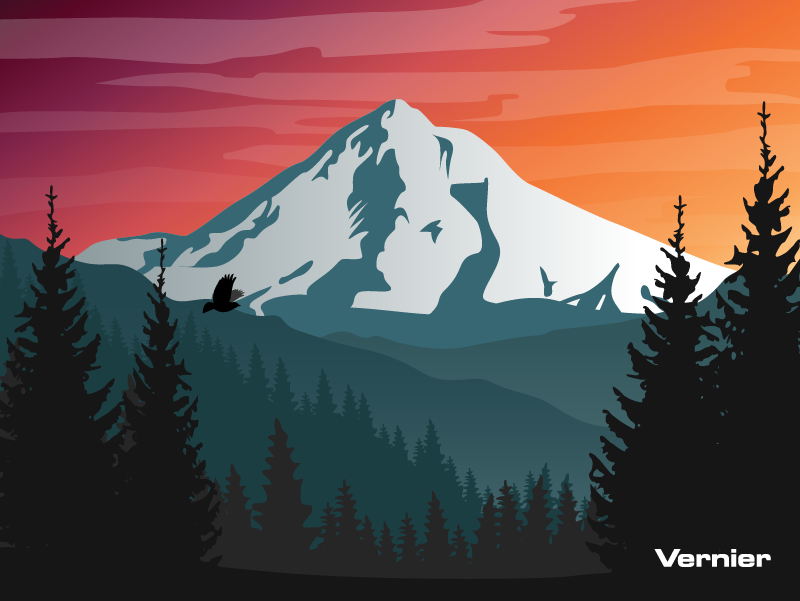
Seasonal Branding & Digital Art
Original digital artwork, seasonal campaigns, and illustrated content across six years.
The Lessons
What I Learned
I learned how to produce good work. Not just design — produce. There's a difference. Working at volume, on schedule, within a brand system that has rules and history and stakeholders, requires a different kind of discipline than a freelance project or a student brief. You don't always get to start from scratch. You don't always get to follow the instinct. You learn to work within constraints and find the creativity inside them rather than despite them.
I learned brand stewardship — what it means to be the person responsible for how something looks over time, not just in a single moment. I learned how to hold a visual identity steady while also keeping it alive.
I learned that doing good work and being recognized for it are not the same thing. That's one of the more quietly difficult realities of working inside an institution, and Vernier taught it to me thoroughly.
The Hard Part
What I Didn't Understand — and Still Don't Fully
There were politics that I never fully decoded. Currents running just under the surface of things — decisions that didn't track, dynamics that shifted without explanation, feedback that contradicted itself. I don't say this to assign blame. I say it because it was real, and pretending otherwise would make this post dishonest.
There where departments that had rules I spent years trying to navigate. There was a pattern of bypassing the design team entirely — from all sides of the coin. I worked closely with the art director, looped him in on nearly everything, and valued that transparency. What wore on me was the layer above that: feedback that had nothing to do with the brand and everything to do with personal preference. Decisions that contradicted established brand standards. A way of responding to my work that felt less like creative direction and more like personal dismissal of my skills and what I brought to the table — as though nothing I produced was quite worthy of approval, regardless of how well it aligned with what the brand actually called for.
It's a particular kind of exhausting, working in good faith within a system while someone else treats the system as optional.
And then there was the layoff itself. The explanation given was that they didn't need two designers. What wasn't said — but became clear — was that my position and another were being dissolved due to a variety of factors, including but not limited to the tariffs, the shutdown of the Department of Education, and funding cuts that schools were told to absorb. They didn't cut my position because the budget was stretched. They cut my position because the direction had already changed — and I wasn't part of where they were going.
Looking back, the signs were there. I wasn't invited to an important meeting where the team was being trained in Salesforce. It was only when my supervisor — who noticed I hadn't been included — pushed back that I was added. No one offered to transition me into something new after the meeting. No one suggested there might be a place for me in whatever they were building next. The door closed quietly, and that was that.
From what I could tell, they knew. They just didn't say anything.
What made it harder was the culture surrounding it. Vernier wasn't supposed to do layoffs — that was part of the pitch. They offered 4-5 week long sabbaticals as a benefit after 7 years, encouraged longevity, rewarded people for staying. I stayed. I believed it. I lived it, I loved working there because they made me feel valuable to the company. I turned down opportunities because I believed it. When July 8th came, that history made everything harder than it might have been otherwise. Years of being encouraged to stay, of being told this was a place that took care of its people, collapsed into a single Tuesday morning.
I've made a certain peace with not having all the answers. But I won't pretend the questions aren't still there.
July 8th, 2025
The Day Itself
July 8th, 2025 was a Tuesday. I'd taken Monday off to recover from the Fourth of July weekend and came back that morning feeling genuinely ready to work. Before sitting down at my desk I'd stopped by the freebie table — that spot where employees would leave things they no longer needed, in case someone else could use them. I dropped off a few things. I wish I hadn't. I didn't know yet that I wouldn't be there for long.
The message came over email and slack, requesting a meeting with the CMO and HR. Anyone who has ever received that particular combination of names knows what it means before the meeting even starts. My stomach dropped and my throat tightened. On the verge of angry tears, I opened the office door to the CMO and Head of HR sitting quietly in the HR office. They closed the door after I entered and sat down...
In the meeting, the explanation was simple and repeated: We don't need two designers.
They explained the company wasn't doing well financially (even though the reports from the sales team said otherwise.) And they needed to bring in more revenue, needed more demand generation, and I was a line item expense. I sat there thinking about what that phrase was actually erasing.
We don't need two designers.
I wasn't the art director. I wasn't the motion and video designer. I was the marketing UX/UI, web, and print designer — the one who took on projects when the art director didn't have the bandwidth, the one who kept the machine running across more surfaces than anyone seemed to want to account for in that moment. The CMO had been a designer herself once. She knew — or should have known — what that workload actually looked like. C-suite has a way of conveniently forgetting.
We don't need two designers.
After the meeting I found some boxes and started loading up my belongings. While I was doing that, the rest of the marketing team was pulled into a meeting to be told about my layoff. I heard later there were tears. There was frustration. I didn't know any of that in the moment — I just knew I wanted to be gone before anyone came back out. I didn't want them to see me cry in my old cubicle. I wanted to scream at the void how this wasn't supposed to happen to me. I loaded my car and left while they were still in that conference room.
Later that morning an email arrived from the CEO. Formal, legal in tone — the kind of language that makes something feel like a transaction rather than the end of six years. I didn't forward it to myself. At the time I wanted nothing to do with having it in my files. I understand that impulse now, even if I wish I'd thought differently in the moment.
I returned later that week — Thursday, I think — to hand in my laptop and collect the rest of my things and have a farewell lunch with my now old coworkers. And that was that.
Now
A Year Out
What came next was this — the portfolio, the case studies, the deliberate work of turning six years of professional output into something legible and mine. It has taken longer than I expected and required me to sit with material that carries emotional weight. Some of those case studies were definitely harder to write than others.
But they exist now. The work is documented. The years are accounted for.
I'm still in the middle of what comes next. The job search continues. The freelance work fills the gaps. The question of where I land is still open. I don't have a tidy resolution to offer. What I have is a body of work I'm proud of and a clearer sense of who I am as a designer than I had when I walked into Vernier all those years ago. Burnout brought me there. The work itself reminded me why I chose this in the first place.
Closing
The Work Remains
A year out, the thing I keep coming back to is this: the work remains.
The catalogs were printed. The website pages were published. The social graphics reached people. The lab books went to classrooms. None of that disappears because the employment ended. The output of six years is still out in the world, still doing what it was designed to do.
And now it's in my portfolio too, where it belongs.
That's not nothing. On a day like today, it feels like enough.
